
SEARCH WHAT YOU WANT
From Raw Materials to Finished Products: Unveiling Brilliant-Tex's "Embedded Quality Control" and How It Defines Fabric Quality Standards
Time:2026-07-16
 In the field of functional textiles, the difference in fabric quality often lies not in "what materials are used," but in "how every step is managed." For applications in demanding environments—such as industrial protective wear, tactical gear, medical textiles, and outdoor equipment—even the slightest performance fluctuation can have implications for user safety and trust. It is with this understanding that Shanghai Brilliant-Tex Textile Co., Ltd. has placed quality control at the core of its corporate strategy—not as "post-production inspection," but as "chain-wide integration."
Quality Control Is Not the "Final Checkpoint"—It Is "Always On-Site"
Under traditional fabric production models, many companies limit their quality oversight to "incoming material sampling + finished goods inspection" at both ends, leaving the intermediate stages to be managed by contract manufacturers themselves. While this approach may be sufficient for conventional textiles, for functional and protective fabrics, every single process—from weaving and dyeing to functional coating and lamination—directly affects the final performance of the fabric. A deviation in any one step can result in substandard functional performance.
Brilliant-Tex has chosen a more rigorous path: deep integration of the Yangtze River Delta's high-quality supply chain, with a seasoned on-site quality assurance team stationed year-round at partner factories, enabling meticulous control over the entire production process.
This model is known in the industry as "embedded quality control"—technical quality assurance personnel do not sit in offices waiting for reports; they put on workwear, stand beside the production lines, and from raw material receiving to finished goods dispatch, participate throughout, record throughout, and verify throughout.
Three-Stage Quality Control: Weaving · Dyeing · Functional Finishing
Within Brilliant-Tex's quality control system, the life cycle of a fabric is divided into three core stages, each with clearly defined technical standards and operational protocols.
Stage One: Weaving—Intervening from the Very Origin of the Greige Fabric. The quality assurance team begins controlling the physical parameters of the greige fabric at the weaving stage, covering yarn count, fabric density, weight per unit area, loom efficiency, and greige defects (such as broken ends, broken picks, wavy weaves, and warp floats). Critical process parameters—including the processing and forming of profiled cross-section fibers and the establishment of yarn tension systems—must be validated and documented during the weaving stage.
Stage Two: Dyeing—Ensuring Color and Fastness Compliance Through Rigorous Inspection. The dyeing quality of functional fabrics directly determines the final appearance consistency and in-service durability of the finished product. Brilliant-Tex's quality assurance team assumes full responsibility for quality inspection during the dyeing stage: verifying that the dye formulation matches the process specification sheet, conducting random sampling to measure batch-to-batch color differences (ΔE values), and performing comprehensive tests on critical performance indicators including dry rub fastness, wet rub fastness, light fastness, and wash fastness, ensuring that color difference values for every batch are consistently controlled within the 4-5 grade standard range. Through a stringent incoming-and-outgoing inspection protocol, color deviations and non-compliant materials are prevented from proceeding to subsequent processes.
Stage Three: Functional Finishing—Verifying That Performance Specifications Have Been Achieved. On the production lines for functional coating, lamination, and printing, Brilliant-Tex's technical personnel center their responsibilities on quality inspection: verifying that coating thickness and uniformity conform to process standards, conducting random sampling to assess lamination peel strength and adhesive interface condition, checking printing pattern accuracy and color difference control, and performing sample verifications of water repellency, stain resistance, flame retardancy, and UV protection performance. Through on-line fabric handle assessment and physical performance testing (including shrinkage rate and retained tensile strength), it is ensured that the functional metrics of every meter of fabric correspond precisely to customer requirements.
Closing the Inspection Loop: Every Batch of Fabric Must Pass "Five Checkpoints"
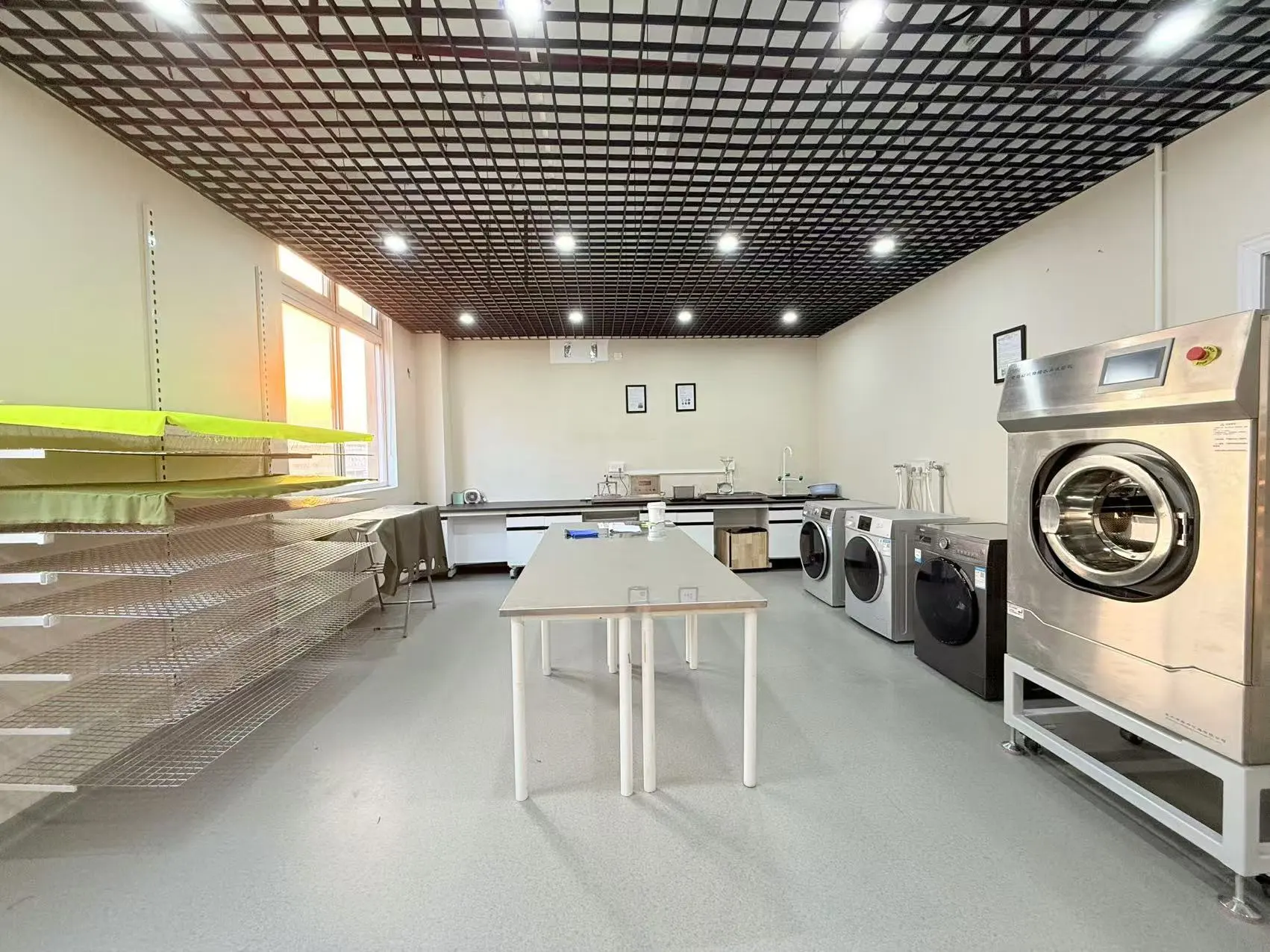
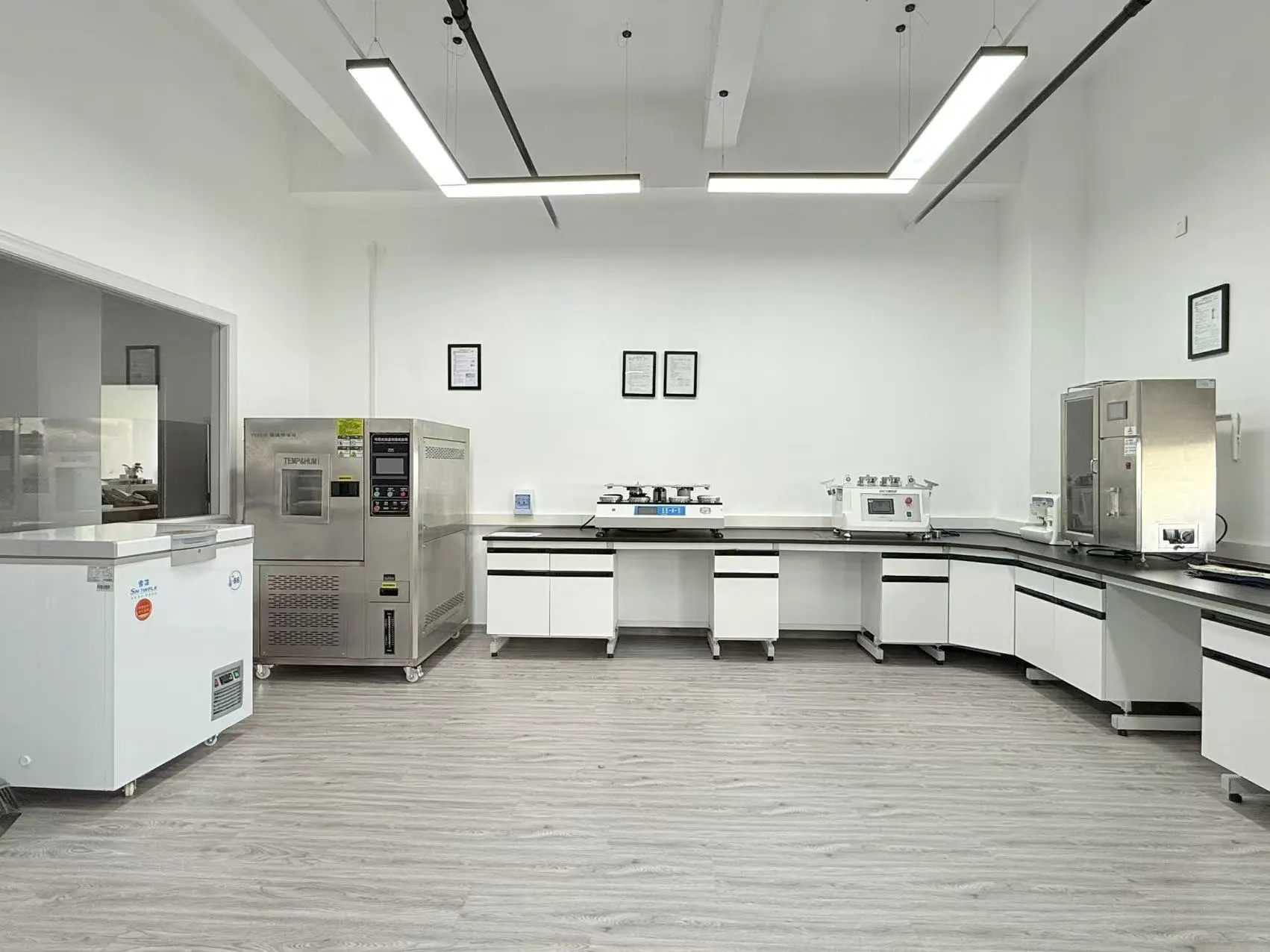
Following rigorous in-process quality control, Brilliant-Tex's accredited in-house testing laboratory serves as the "last mile" of quality assurance. Equipped with precision testing instruments and operating in strict compliance with international standards, the laboratory conducts full-process quality control over a comprehensive range of key fabric metrics, including tensile strength, water resistance, dimensional stability, air permeability, and color fastness.
From incoming raw material inspection and in-process production audits through to finished goods outgoing inspection, Brilliant-Tex has established a complete "three-tier inspection system." Every shipment undergoes step-by-step verification at multiple quality control checkpoints. This is not merely a procedural requirement—it is the fulfillment of the commitment to every customer that "every meter of fabric is the definitive answer to quality."
More Than "Oversight"—Co-Guardians of the Quality Frontline
What distinguishes Brilliant-Tex's embedded quality control is that the quality assurance team does not appear at partner factories in the role of "overseers"—they serve simultaneously as quality supervisors for partner factories and on-site process verification auditors. From raw material receiving to finished goods dispatch, the quality team conducts item-by-item verification of critical process parameters and semi-finished product quality across the three core stages of weaving, dyeing, and functional finishing. Any deviations identified are promptly flagged, and the team collaborates with factory management to facilitate the implementation of corrective measures. Process standard pre-setting, checkpoint inspection execution, and on-site problem investigation and reporting form the core competencies of daily resident operations. This "embedded" quality control model embeds the standard of "craftsmanship-driven manufacturing" throughout all outsourced processes, ensuring that every step from product development to finished goods consistently delivers uncompromising quality.
Quality Is More Than a Cost—It Is a Matter of Trust
The end-use applications of functional fabrics impose exacting quality requirements—outdoor workers, law enforcement personnel, medical staff, and those operating in extreme environments have their safety and comfort directly dependent on the fabric they wear.
Brilliant-Tex is committed to the mission of "safeguarding those who work in extreme environments." This mission is realized not in slogans, but in every day and night spent on-site at partner factories, and in the inspection records of every batch of fabric. What we deliver to our customers is not merely a product, but a trust credential that has withstood rigorous testing.
In the field of functional textiles, the difference in fabric quality often lies not in "what materials are used," but in "how every step is managed." For applications in demanding environments—such as industrial protective wear, tactical gear, medical textiles, and outdoor equipment—even the slightest performance fluctuation can have implications for user safety and trust. It is with this understanding that Shanghai Brilliant-Tex Textile Co., Ltd. has placed quality control at the core of its corporate strategy—not as "post-production inspection," but as "chain-wide integration."
Quality Control Is Not the "Final Checkpoint"—It Is "Always On-Site"
Under traditional fabric production models, many companies limit their quality oversight to "incoming material sampling + finished goods inspection" at both ends, leaving the intermediate stages to be managed by contract manufacturers themselves. While this approach may be sufficient for conventional textiles, for functional and protective fabrics, every single process—from weaving and dyeing to functional coating and lamination—directly affects the final performance of the fabric. A deviation in any one step can result in substandard functional performance.
Brilliant-Tex has chosen a more rigorous path: deep integration of the Yangtze River Delta's high-quality supply chain, with a seasoned on-site quality assurance team stationed year-round at partner factories, enabling meticulous control over the entire production process.
This model is known in the industry as "embedded quality control"—technical quality assurance personnel do not sit in offices waiting for reports; they put on workwear, stand beside the production lines, and from raw material receiving to finished goods dispatch, participate throughout, record throughout, and verify throughout.
Three-Stage Quality Control: Weaving · Dyeing · Functional Finishing
Within Brilliant-Tex's quality control system, the life cycle of a fabric is divided into three core stages, each with clearly defined technical standards and operational protocols.
Stage One: Weaving—Intervening from the Very Origin of the Greige Fabric. The quality assurance team begins controlling the physical parameters of the greige fabric at the weaving stage, covering yarn count, fabric density, weight per unit area, loom efficiency, and greige defects (such as broken ends, broken picks, wavy weaves, and warp floats). Critical process parameters—including the processing and forming of profiled cross-section fibers and the establishment of yarn tension systems—must be validated and documented during the weaving stage.
Stage Two: Dyeing—Ensuring Color and Fastness Compliance Through Rigorous Inspection. The dyeing quality of functional fabrics directly determines the final appearance consistency and in-service durability of the finished product. Brilliant-Tex's quality assurance team assumes full responsibility for quality inspection during the dyeing stage: verifying that the dye formulation matches the process specification sheet, conducting random sampling to measure batch-to-batch color differences (ΔE values), and performing comprehensive tests on critical performance indicators including dry rub fastness, wet rub fastness, light fastness, and wash fastness, ensuring that color difference values for every batch are consistently controlled within the 4-5 grade standard range. Through a stringent incoming-and-outgoing inspection protocol, color deviations and non-compliant materials are prevented from proceeding to subsequent processes.
Stage Three: Functional Finishing—Verifying That Performance Specifications Have Been Achieved. On the production lines for functional coating, lamination, and printing, Brilliant-Tex's technical personnel center their responsibilities on quality inspection: verifying that coating thickness and uniformity conform to process standards, conducting random sampling to assess lamination peel strength and adhesive interface condition, checking printing pattern accuracy and color difference control, and performing sample verifications of water repellency, stain resistance, flame retardancy, and UV protection performance. Through on-line fabric handle assessment and physical performance testing (including shrinkage rate and retained tensile strength), it is ensured that the functional metrics of every meter of fabric correspond precisely to customer requirements.
Closing the Inspection Loop: Every Batch of Fabric Must Pass "Five Checkpoints"
Following rigorous in-process quality control, Brilliant-Tex's accredited in-house testing laboratory serves as the "last mile" of quality assurance. Equipped with precision testing instruments and operating in strict compliance with international standards, the laboratory conducts full-process quality control over a comprehensive range of key fabric metrics, including tensile strength, water resistance, dimensional stability, air permeability, and color fastness.
From incoming raw material inspection and in-process production audits through to finished goods outgoing inspection, Brilliant-Tex has established a complete "three-tier inspection system." Every shipment undergoes step-by-step verification at multiple quality control checkpoints. This is not merely a procedural requirement—it is the fulfillment of the commitment to every customer that "every meter of fabric is the definitive answer to quality."
More Than "Oversight"—Co-Guardians of the Quality Frontline
What distinguishes Brilliant-Tex's embedded quality control is that the quality assurance team does not appear at partner factories in the role of "overseers"—they serve simultaneously as quality supervisors for partner factories and on-site process verification auditors. From raw material receiving to finished goods dispatch, the quality team conducts item-by-item verification of critical process parameters and semi-finished product quality across the three core stages of weaving, dyeing, and functional finishing. Any deviations identified are promptly flagged, and the team collaborates with factory management to facilitate the implementation of corrective measures. Process standard pre-setting, checkpoint inspection execution, and on-site problem investigation and reporting form the core competencies of daily resident operations. This "embedded" quality control model embeds the standard of "craftsmanship-driven manufacturing" throughout all outsourced processes, ensuring that every step from product development to finished goods consistently delivers uncompromising quality.
Quality Is More Than a Cost—It Is a Matter of Trust
The end-use applications of functional fabrics impose exacting quality requirements—outdoor workers, law enforcement personnel, medical staff, and those operating in extreme environments have their safety and comfort directly dependent on the fabric they wear.
Brilliant-Tex is committed to the mission of "safeguarding those who work in extreme environments." This mission is realized not in slogans, but in every day and night spent on-site at partner factories, and in the inspection records of every batch of fabric. What we deliver to our customers is not merely a product, but a trust credential that has withstood rigorous testing.

FABRIC FOR TECHNICAL PROTECTION
Copyright © 2025 Shanghai Brilliant Textile Co., Ltd.